
Closet Shelf Depth: Why 14 Inches Suits Most Closets
The standard closet shelf depth we build to is 14 inches. It holds folded clothes and most shoes in a single visible row, works for hanging, and lets each section change function later. Deeper shelves add a hidden back row more than they add storage.
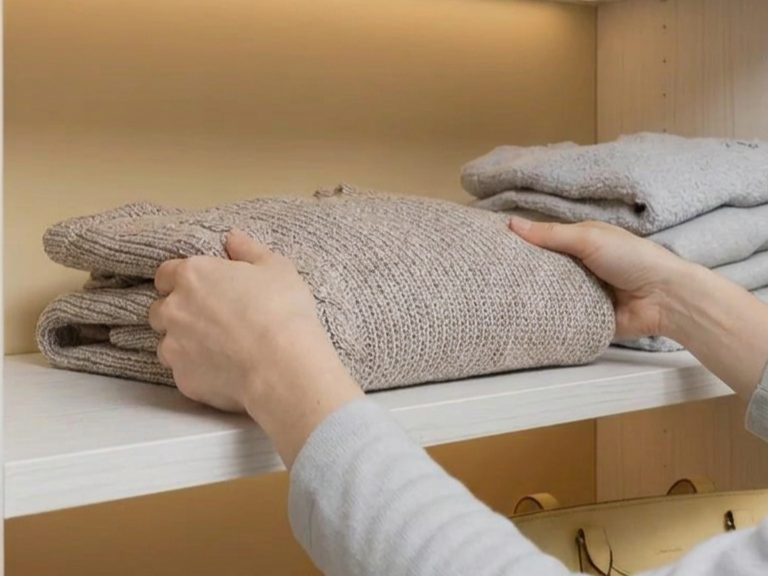
The closet shelf depth that suits most closets is 14 inches. At that depth, folded clothes and the majority of shoe sizes sit in a single row that stays visible, and the same section can be used for shelves or for hanging. A 12 inch depth is generally suitable for hanging only. A 16 inch shelf does not hold meaningfully more than a 14 inch shelf. Deeper sections, at 20 or 24 inches, are used for specific needs such as deep drawers or a wardrobe with doors.
As a closet designer, I often meet customers who expect a deeper shelf to give them more storage. It is a reasonable assumption, and this article explains why it usually does not work that way.
Why deeper shelves do not add storage
A shelf is useful as far back as you can see and reach. When a shelf is deeper than the items on it, a second row forms behind the first. Clothes at the back get pushed out of sight and are forgotten, and what cannot be seen is rarely worn. Deeper shelves also take floor space from the closet, which makes a walk-in closet harder to move around in and makes the items harder to reach.
Why 14 inches suits most closets
A 14 inch deep system can be used for hanging and for shelving, and it holds the typical items stored in a closet. Because every section is the same depth, the function of a section can be changed later, for example from shelves to hanging, without rebuilding it. This is the flexibility described in our article on closet systems and cabinets. It is also the depth most closet hardware is made for: pull-out belt racks, tie racks, pant racks and baskets are commonly built for 14 inch deep sections.
12 inch and 16 inch closet shelves
At 12 inches, a section is generally suitable for hanging only. Most folded items and many shoes pass over the front edge of a 12 inch shelf. At 16 inches, the shelf is deeper than a folded item needs to be, so the extra 2 inches do not add storage capacity. Where 16 inches does help is drawer space.
Shelf depth for folded clothes and shoes
Folded sweaters, shirts and jeans fit on a 14 inch shelf in a single row, with the fold facing forward, so each stack can be seen and lifted out without moving another. Shoes sit front to back in one row, and 14 inches fits the majority of shoe sizes without the toe or heel passing the edge.
Shelf depth for hanging clothes
Clothes on hangers take 22 to 23 inches, so in a 14 inch deep section they hang past the front of the panels. In an open closet this is normal and does not affect how the closet works. When the closet is to have doors, we build it as a wardrobe at 24 inches deep so the doors close in front of the clothes.
When we build deeper than 14 inches
Some designs call for more depth in one part of the closet. A wardrobe with doors is built at 24 inches. Where a customer wants deep drawers, we may build a separate hutch with 20 inch deep drawers and keep the rest of the system at 14 inches. A section deeper than 14 inches is built as floor mount, as explained in our article on wall mount and floor mount closets. We go shallower than 14 inches for storage only where the space or the design leaves no other option.
Pantry shelf depth
The same reasoning applies to a pantry, and 14 inches is the depth we generally recommend there as well. On deeper pantry shelves, items at the back are harder to find. We do build deeper pantry storage when a design calls for it.
Closet depths compared
12 inches. Generally suitable for hanging only. Folded items and many shoes pass over the edge.
14 inches. Suits most closets and pantries. Works for hanging, folded clothes and shoes, and for most closet hardware.
16 inches. Adds little storage over 14 inches. Useful for drawer space.
20 inches. Used for a hutch with deep drawers.
24 inches. Used for a wardrobe with doors.
Plan your closet with a designer
During a free in-home design visit, our designer measures the space and looks at what you need to store before recommending the depth of each section. You can see examples of our work on the custom closets page.
Frequently Asked Questions
What is the best depth for pantry shelves to store food items?
We generally recommend 14 inches for pantry shelves, the same depth as in a closet. On deeper shelves, items at the back are harder to find and tend to be forgotten. Deeper pantry storage can be built when a design calls for it.
What is the standard depth for closet shelving?
The depth we build most closet shelving to is 14 inches. It holds folded clothes and the majority of shoe sizes in a single visible row, works for hanging as well, and is the depth most closet hardware is made for. A 12 inch depth is generally suitable for hanging only, and 16 inches adds little storage over 14.
What is the ideal closet shelf depth for storing shoes?
A 14 inch deep shelf suits shoe storage in most closets. Shoes sit front to back in a single row, and 14 inches fits the majority of shoe sizes without the toe or heel passing the edge. On a 12 inch shelf, many shoes pass over the front.
What is the recommended closet shelf depth for folded clothes?
We generally recommend 14 inches for folded clothes. Sweaters, shirts and jeans fit in a single row with the fold facing forward, so each stack can be seen and lifted out without moving another. On a 12 inch shelf most folded items pass over the front edge, and on a deeper shelf a hidden second row tends to form at the back.
How deep should shelves be for a walk-in closet?
In most walk-in closets, 14 inches is the depth we recommend. Deeper shelves take floor space, which makes the closet harder to move around in, and items at the back become harder to see and reach. Where a design calls for it, one part of the closet can be deeper, such as a hutch with 20 inch deep drawers, while the rest stays at 14 inches.
About The Author

Pegah is a Design Consultant at Clever Quarters with more than 10 years of design experience and a background in visual arts and graphic design. She specializes in creating kitchens, closets, and custom storage solutions that combine thoughtful space planning, functionality, and personal style.
Ready to Transform Your Space?
An organized home is closer than you think. It all starts with a friendly conversation about the possibilities for your space. Contact us today to schedule your complimentary, no-obligation design consultation with one of our expert designers.

Related Posts
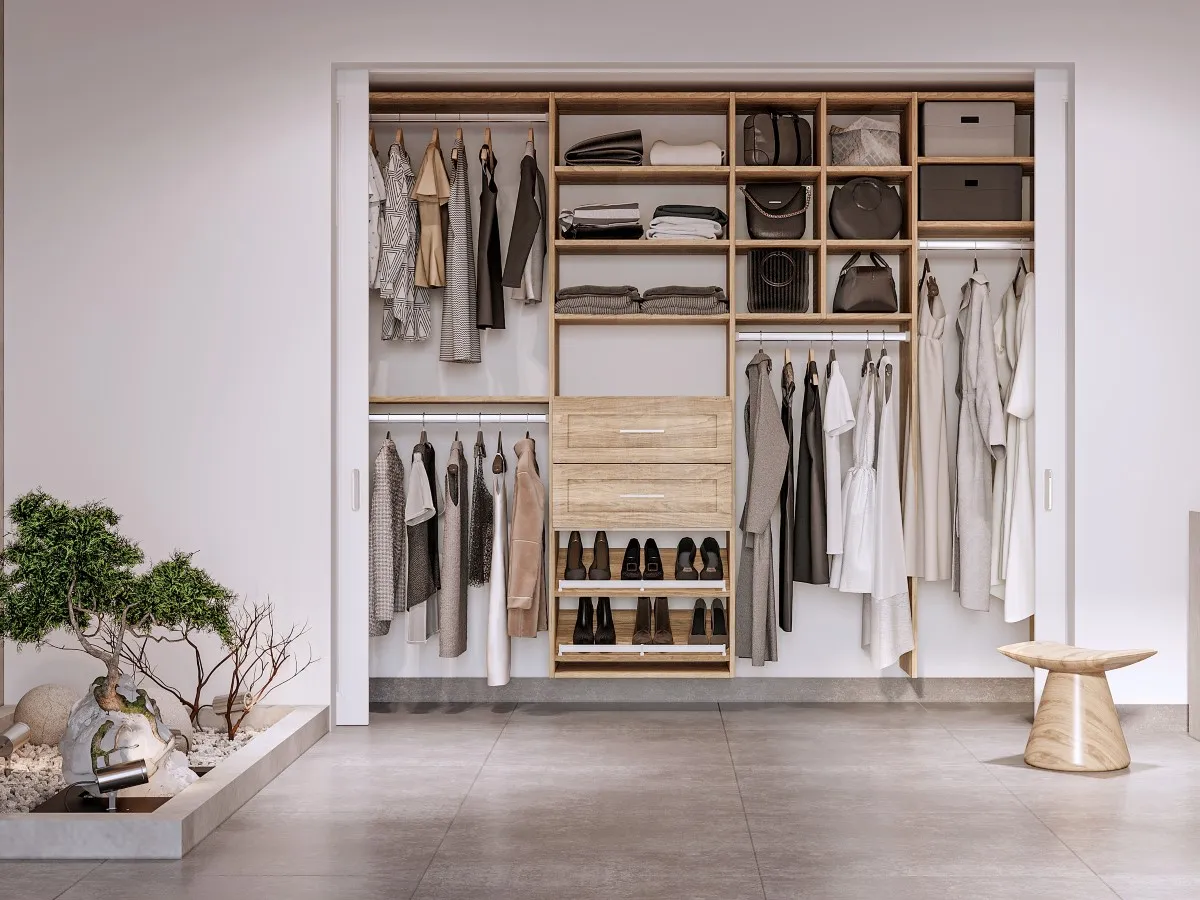
Wall Mount vs Floor Mount Closet: Which One Is Right for You?
A wall mount closet hangs from a steel rail and floats above the floor. A floor mount closet sits on a toe kick base. On the same design, wall mount generally costs 15 to 20 percent less, while floor mount suits sections deeper than 14 inches and heavy storage.
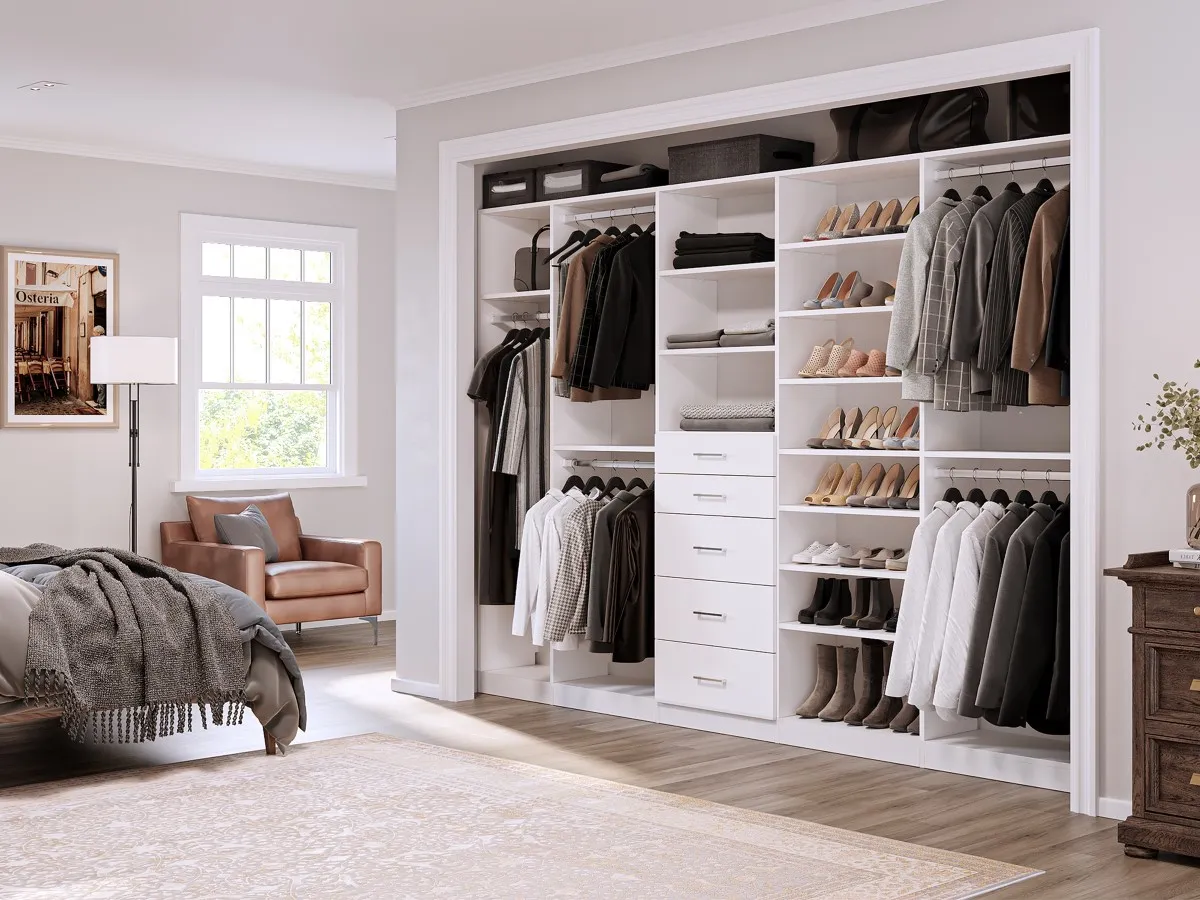
Closet System vs Cabinet: What Is the Difference?
A cabinet is a finished box built in a workshop and placed in a room. A closet system is a set of standardized panels assembled inside the closet and fixed to the walls, which is why sections share partitions, there is no back panel, and the panels have rows of holes.
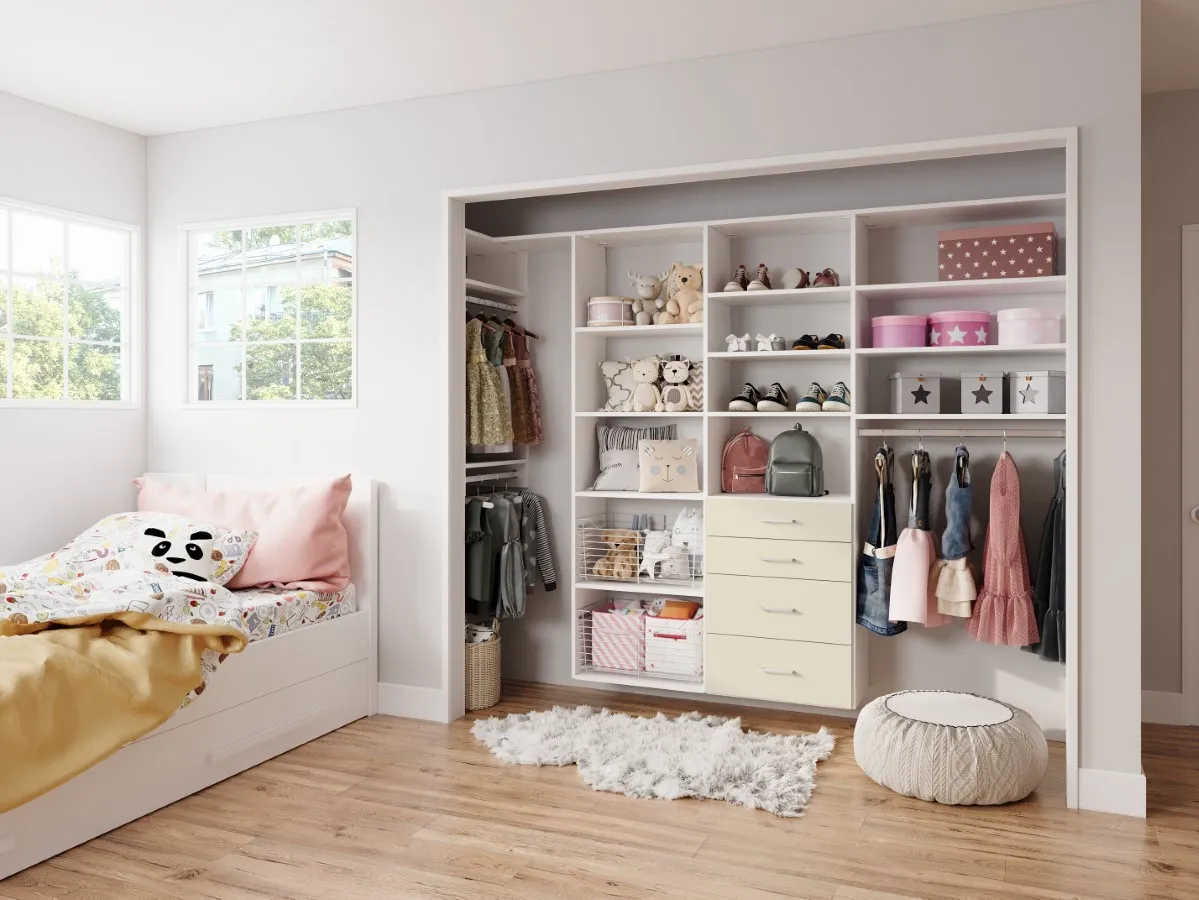
Reach-in Closet With a Deep Side or a Small Door: How to Use the Dead Corner
A dead corner is the part of a reach-in closet hidden behind the wall beside the door opening. The most recommended use of it is hanging clothes front to back, with shelving or drawers in the unit beside it.

