
What Is a Custom Closet? Components, Dimensions and How It Is Designed
A custom closet is a modular storage system of vertical panels, shelves, hanging rods and drawers, designed and built to fit your space and what you store. This guide explains the components, the typical dimensions, the design possibilities, how it is built and installed, and what affects the price.
A custom closet is a modular storage system of vertical panels, fixed and adjustable shelves, hanging rods and drawers, designed and built to fit your exact space and your wardrobe.
This guide explains what a custom closet is made of, the typical dimensions our designers work with and the reasons behind them, how the system is built and installed, and what it can and cannot do. It is based on the closets we design, build in our own Vancouver workshop and install across Greater Vancouver.
Custom closet vs standard closet
A standard closet, as most homes are built, typically has a single rod and one shelf above it, or a set of wire shelves. Everything hangs at one height, and the space above and below the clothes goes unused. A custom closet divides the same space into sections, and each section is designed for what it will hold: two levels of hanging for shirts, long hanging for dresses, shelves for folded clothes and shoes, and drawers for smaller items.
The building blocks of a custom closet
A custom closet is not a single piece of furniture. It is a system made from a small number of parts.
Vertical panels
Vertical panels are the structure of the closet. They divide the closet into sections and carry the shelves, rods and drawers. They either hang from the wall or sit on the floor.
Fixed shelves
Fixed shelves lock the vertical panels together. They keep the structure rigid and square.
Adjustable shelves and rods
Adjustable shelves rest on pins that fit into rows of holes drilled in the panels. Hanging rods use the same holes. This is what allows a section to be rearranged later as needs change.
Drawers and accessories
Drawers keep smaller items out of sight. Accessories such as pull-out racks, baskets and shoe shelves fit the same panels.
Typical closet dimensions and why they are used
Our designers work with a set of typical dimensions. They are based on ergonomics: how far a person can reach, how long clothes hang and how much room folded items need. They are starting points and not limits, and every closet is still designed and sized to its room.
Height: 86 inches. This height allows two hanging rods, one above the other, with the clothes clear of the floor and the top rod within reach.
Depth: 14 inches. At 14 inches, folded clothes and most shoes sit in a single visible row, and the same section works for hanging. Our article on closet shelf depth explains this in detail.
Width: 18, 24, 30 and 36 inches. These widths suit the way clothes are hung and folded, and closet accessories such as pull-out racks and baskets are made to fit them. A section can take an accessory later without being rebuilt.
The main section types
A custom closet is a combination of a few section types, chosen for what you own.
Double hang. Two rods, one above the other, for shirts, jackets and folded trousers. It is the most efficient use of hanging space.
Mid hang. A single rod at medium height for blouses, skirts and short dresses, with shelves above or below.
Long hang. A single high rod for long dresses, coats and formal wear.
Shelving. A column of adjustable shelves for folded clothes, shoes, hats and bins.
Shelves and drawers. Open shelves above a bank of drawers, combining items you want to see with items you prefer to keep out of sight.
Endless design possibilities
The main strength of a closet system is the number of ways it can be configured. Five section types, four typical widths, depths from 12 to 24 inches, wall mount or floor mount, and a range of drawers, accessories and finishes can be combined in more ways than anyone could list. This is why two closets of the same size rarely end up with the same design, and why a closet can be designed around one person's wardrobe instead of an average one. The same parts also allow the closet to change later, when the wardrobe or the person using it changes.
How a closet system is built
A closet system is assembled inside the closet, panel by panel, and fixed to the walls. Neighbouring sections share one 3/4 inch partition, and the wall serves as the back. The panels follow the 32 mm hole pattern, a European cabinetmaking standard, so shelves, rods and drawers fit any panel. Because walls are rarely perfectly flat, a small gap between a panel and the wall is normal. Our article on closet systems and cabinets explains why closets are built this way.
Wall mount and floor mount
A wall mount closet hangs from a steel rail and floats above the floor. A floor mount closet sits on the floor on a toe kick base and has a built-in look. On the same design, wall mount generally costs 15 to 20 percent less, and floor mount suits deeper sections and heavy storage. The two can be combined in one closet. See our article on wall mount and floor mount closets.
Materials
Our closet panels are 3/4 inch melamine with matching edge banding on the exposed edges. Melamine has a hard, sealed surface that is easy to clean and is available in white, colours and woodgrain finishes. Our melamine is CARB2 compliant, which means it meets the California Air Resources Board Phase 2 limits for formaldehyde emissions from composite wood, a widely used benchmark for indoor air quality. We source our materials from Canada, the United States and Europe, and we manufacture every closet in our own Vancouver workshop.
What makes a closet custom
The parts follow typical dimensions. The design does not. A custom closet is planned around the room and around what will be stored in it. The designer chooses which section types to use and in what proportion, based on how much hanging, folding and shoe storage the customer needs. The design is then fitted to the room, including sloped ceilings, bulkheads, windows and corners. In a reach-in closet, for example, the space hidden beside the door opening needs its own solution, which we explain in our article on reach-in closets with a deep side or a small door.
Benefits of a custom closet
More storage in the same space. A double hang section has two rods where a standard closet has one, so the hanging capacity of that section doubles. Shelves and drawers use the height that a single rod leaves empty.
Designed around what you own. The mix of hanging, shelves and drawers follows the wardrobe, so each kind of item has a place.
Everything visible and within reach. At 14 inches deep, items sit in a single row and are not hidden behind one another.
It changes with you. Shelves and rods can be moved, and a section can be given a new function later.
How a custom closet is designed and installed
Our process has four steps.
1. Design consultation. A designer visits the home, measures the space, looks at what needs to be stored and discusses the budget.
2. 3D design review. The designer prepares a 3D model, and the customer and designer refine it together until it is right.
3. Manufacturing. The closet is built in our own workshop.
4. Installation. Our installers assemble the closet in the room and walk the customer through its features and care. Delivery and installation generally take 2 to 5 weeks from the approved design, depending on the project.
What affects the price of a custom closet
The same closet space can be built in many ways, so we ask about the budget at the start and design to it. The main factors are the number of drawers and accessories, the finish, wall mount or floor mount, and whether the closet has doors. Shelves and hanging cost less than drawers. A wall mount closet costs less than the same design as floor mount.
What a custom closet cannot do
A custom closet makes better use of a space, but it does not make the space larger. If a wardrobe is much bigger than the closet, some of it will still need to be stored elsewhere. A closet is also designed around the existing walls, plumbing and electrical. Moving any of these is renovation work that involves other trades, and we discuss those limits during the consultation.
Plan your custom closet
If you would like to see how these building blocks would work in your own space, book a free in-home design visit. You can also see closet systems in person at our showroom, or read about walk-in closets and reach-in closets.
Frequently Asked Questions
What are the typical components included in a custom closet design?
A custom closet is built from vertical panels, fixed shelves that lock the panels together, adjustable shelves, hanging rods, and drawers. These are combined into sections: double hang, mid hang, long hang, shelving, and shelves with drawers. Accessories such as pull-out racks, baskets and shoe shelves fit the same panels.
What are the benefits of installing a custom closet system?
A custom closet system gives more storage in the same space, because sections such as double hang use the height a single rod leaves empty. It is designed around what you own, it keeps items visible and within reach, and it can change later because shelves and rods can be moved. The parts can be combined in a very large number of ways, so the design fits the person and the room.
What types of materials are commonly used in custom closets?
Custom closet panels are most commonly made of melamine. Ours are 3/4 inch melamine with matching edge banding on the exposed edges. Melamine has a hard, sealed surface that is easy to clean and comes in white, colours and woodgrain finishes. Our melamine is CARB2 compliant, meaning it meets the California Air Resources Board Phase 2 limits for formaldehyde emissions.
What factors influence the price of a custom closet?
The main factors are the number of drawers and accessories, the finish, whether the closet is wall mount or floor mount, and whether it has doors. Shelves and hanging cost less than drawers, and a wall mount closet generally costs 15 to 20 percent less than the same design as floor mount. We ask about the budget at the start and design the closet to it.
What is a custom closet and how does it differ from a standard closet?
A custom closet is a modular storage system of vertical panels, shelves, hanging rods and drawers, designed and built to fit a specific space and wardrobe. A standard closet typically has a single rod and one shelf, so everything hangs at one height and much of the space goes unused. A custom closet divides the same space into sections, each designed for what it will hold.
About The Author

Cristy is the Chief Operating Officer at Clever Quarters. She has over seven years of experience with the company, advancing from Customer Service and Operations Manager to a key leadership role. Her expertise in customer service and operations management contributes to Clever Quarters' success. Outside of work, Cristy is actively engaged in her community, balancing her professional life with being a mother and a dedicated sports coach for soccer and softball teams.
Ready to Transform Your Space?
An organized home is closer than you think. It all starts with a friendly conversation about the possibilities for your space. Contact us today to schedule your complimentary, no-obligation design consultation with one of our expert designers.

Related Posts
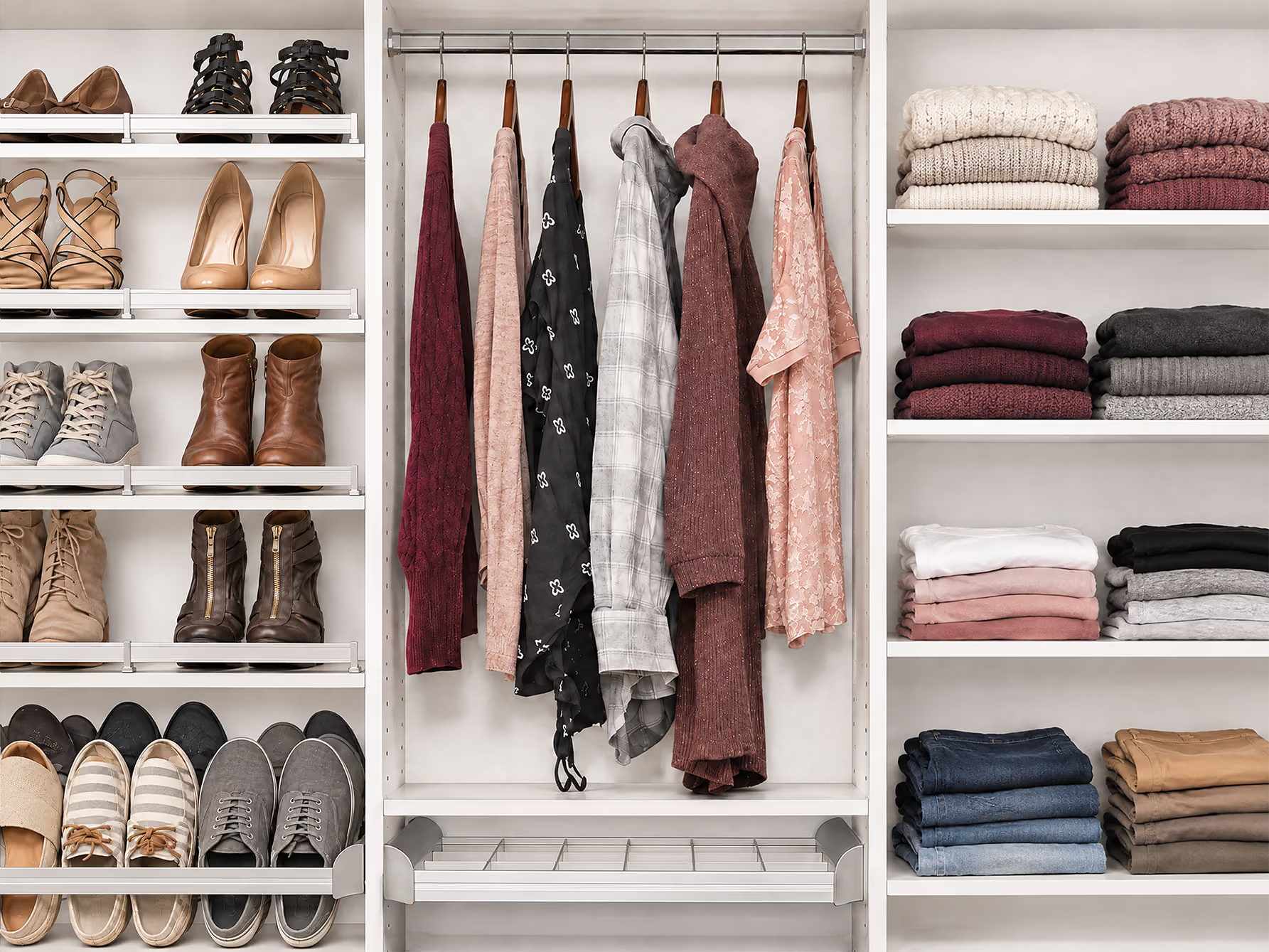
Closet Shelf Depth: Why 14 Inches Suits Most Closets
The standard closet shelf depth we build to is 14 inches. It holds folded clothes and most shoes in a single visible row, works for hanging, and lets each section change function later. Deeper shelves add a hidden back row more than they add storage.
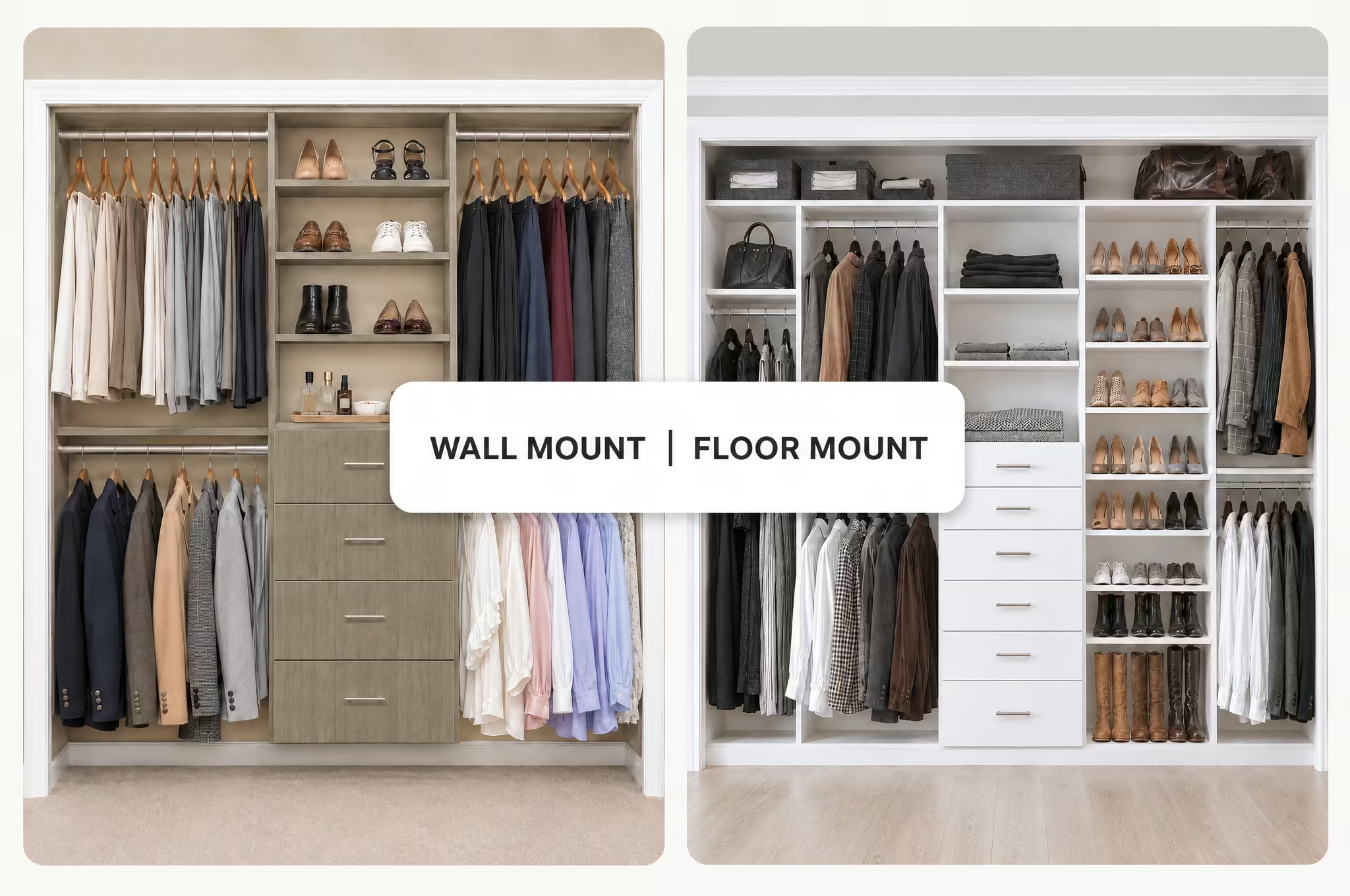
Wall Mount vs Floor Mount Closet: Which One Is Right for You?
A wall mount closet hangs from a steel rail and floats above the floor. A floor mount closet sits on a toe kick base. On the same design, wall mount generally costs 15 to 20 percent less, while floor mount suits sections deeper than 14 inches and heavy storage.
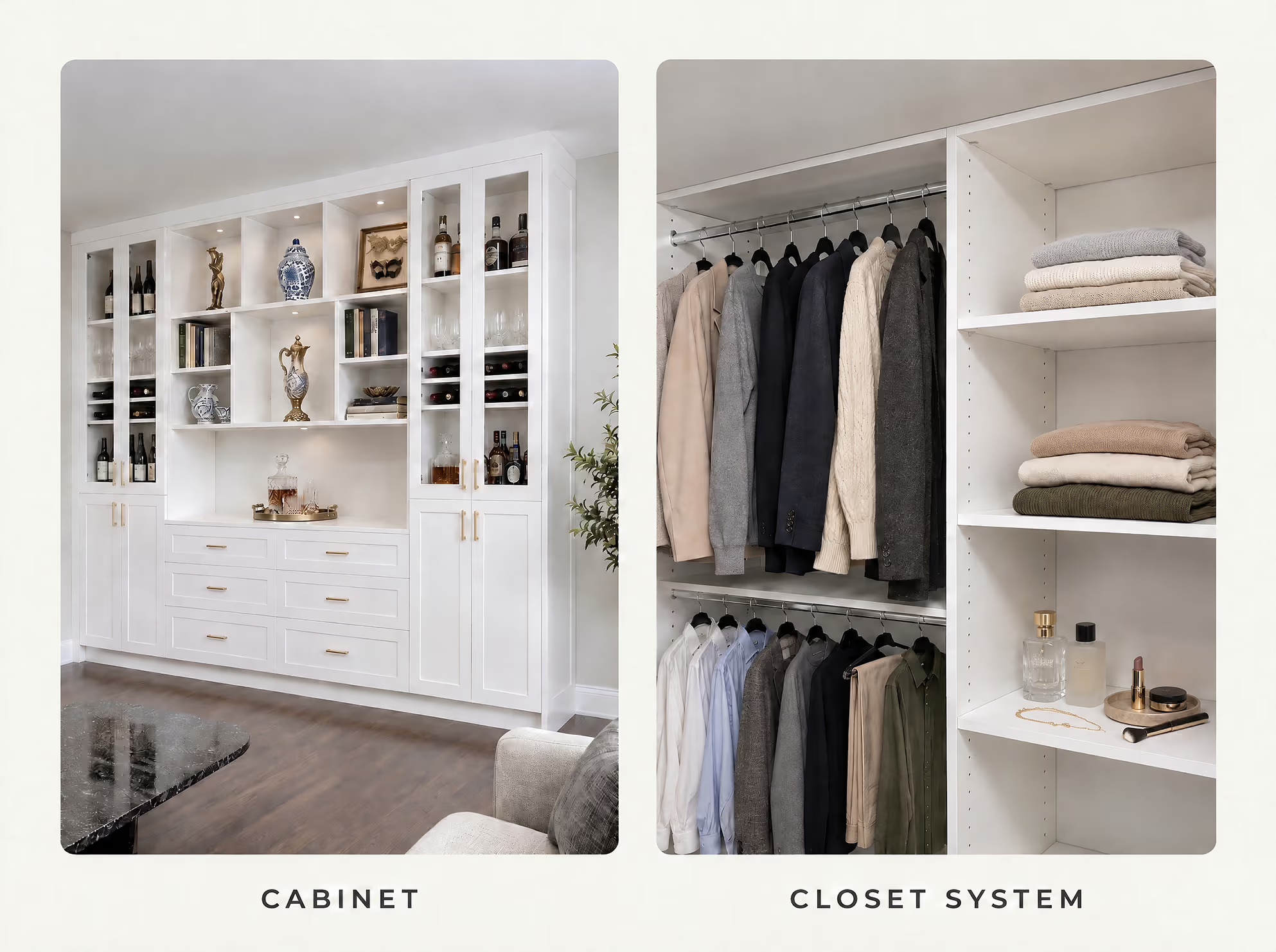
Closet System vs Cabinet: What Is the Difference?
A cabinet is a finished box built in a workshop and placed in a room. A closet system is a set of standardized panels assembled inside the closet and fixed to the walls, which is why sections share partitions, there is no back panel, and the panels have rows of holes.

